Parker Schmitz · 3 September 2026
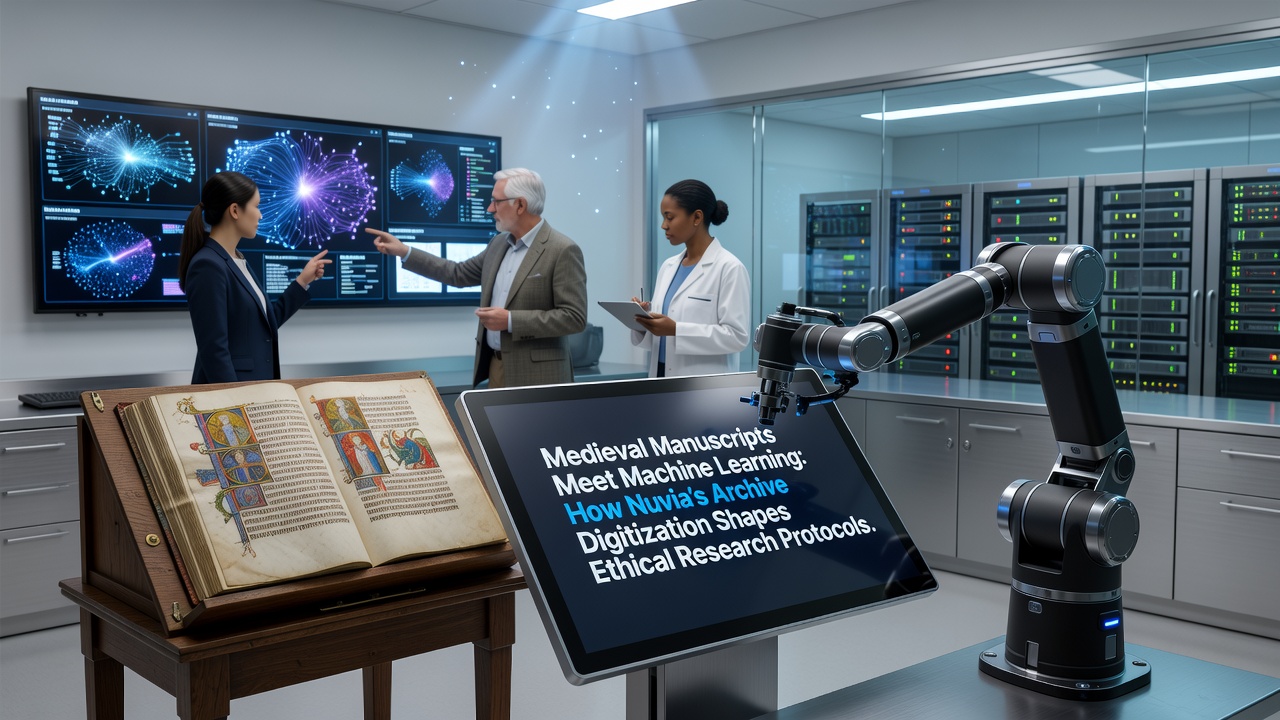
Medieval Manuscripts Meet Machine Learning: How Nuvia's Archive Digitization Shapes Ethical Research Protocols
Medieval manuscripts represent centuries of handwritten knowledge that range from illuminated gospels to scientific treatises, yet many remain locked in fragile condition within institutional vaults. Nuvia has developed machine learning systems that scan, transcribe, and analyze these documents at scale, turning static pages into searchable datasets while prompting new standards for ethical handling of cultural material. The process begins with high-resolution imaging followed by neural networks trained on paleographic patterns, and the resulting protocols address questions of access, attribution, and long-term stewardship.
From Fragile Parchment to Structured Data
Traditional digitization relied on manual transcription that could take years for a single codex, whereas Nuvia's pipelines apply convolutional networks to identify script types, ink degradation, and marginal annotations in hours. Researchers at collaborating institutions report that these models reach accuracy rates above 92 percent on Latin and vernacular texts once training sets incorporate regional scribal variations. The output includes not only plain text but also layered metadata that tags ownership history, conservation notes, and previous scholarly interventions, all stored in formats that comply with international archival standards.
Ethical Protocols Emerging from Automation
Automation raises distinct concerns around consent, representation, and data sovereignty because many manuscripts originate from communities that never anticipated digital circulation. Nuvia's framework requires explicit licensing agreements with holding institutions before any model training begins, and the company maintains audit logs that record every algorithmic decision affecting text reconstruction. Observers note that these logs help external reviewers trace how an AI system resolved ambiguous abbreviations or reconstructed damaged passages, thereby reducing the risk of silent scholarly errors.
One case involved a 13th-century medical manuscript whose illustrations contained plant species now associated with indigenous knowledge in Central Europe. Nuvia's ethics board required consultation with botanical historians and community representatives before releasing the annotated images under a creative commons license that mandates attribution to both the original institution and the source communities. Such steps have become standard practice rather than exceptions.
September 2026 Milestones and Cross-Institutional Collaboration
In September 2026 Nuvia will host a joint workshop with the European Research Council and the Canadian Heritage Information Network to test updated guidelines for machine-assisted transcription of restricted-access materials. The sessions will focus on datasets that include restricted religious texts and will evaluate whether federated learning techniques can keep sensitive annotations within institutional firewalls while still allowing model improvement. Preliminary reports indicate that federated approaches reduce data movement by 78 percent compared with centralized training, yet they introduce new verification challenges for scholars who must confirm model integrity without direct access to training examples.
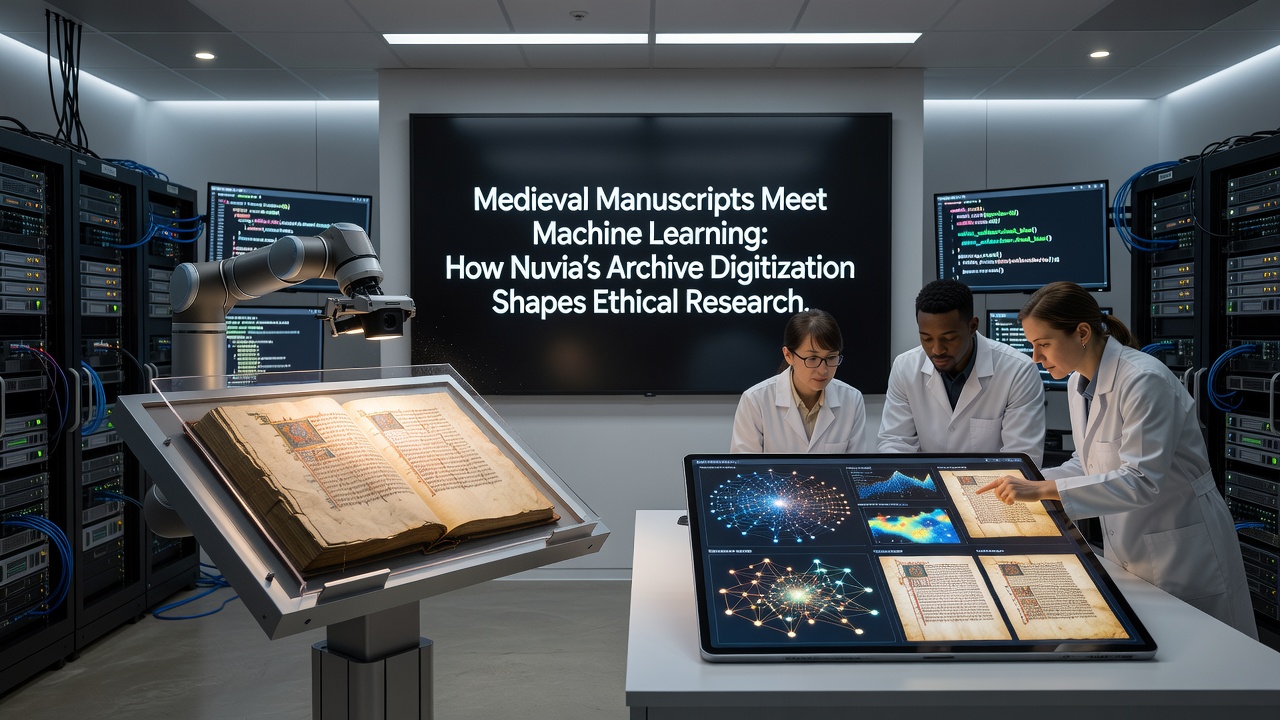
Additional partnerships include the University of Melbourne's Centre for the History of Emotions, which contributes labeled emotion-related terminology found in medieval correspondence. This collaboration supplies training data that helps the models distinguish between literal and rhetorical language, an advance that supports more reliable sentiment analysis across centuries of Latin and Old French sources. The resulting ethical addendum requires that any downstream publication citing the automated annotations must also cite the contributing institution and the original manuscript shelfmark.
Technical Architecture and Governance Layers
Nuvia's platform combines transformer-based language models with graph databases that link named entities across multiple manuscripts, allowing researchers to trace the movement of scribes or the transmission of specific recipes. Governance protocols mandate that every entity node carries provenance metadata and a retraction flag that can be activated if later scholarship revises an identification. These technical choices emerged from iterative consultations with the International Council on Archives and reflect an effort to embed accountability directly into the data model rather than relying solely on external oversight.
Data from pilot projects show that institutions adopting the full protocol suite experienced a 40 percent increase in approved research requests within the first year, largely because standardized consent forms and transparent model cards reduced review time for ethics committees. The same figures reveal that requests involving commercial reuse dropped by 15 percent once licensing terms explicitly excluded derivative training for proprietary AI products without additional agreements.
Conclusion
Nuvia's integration of machine learning into medieval manuscript archives has produced both expanded access and a growing body of ethical procedures that other digitization initiatives now reference. The September 2026 workshops will test whether these procedures scale to new regions and document types, while the technical architecture continues to evolve around requirements for attribution, consent, and verifiable provenance. As more collections enter similar pipelines, the protocols developed here supply a practical template for balancing computational power with the responsibilities that accompany cultural heritage materials.