Jakob Jenkins · 17 September 2026
Renewable Infrastructure Shifts and Continental AI Programs Reshape Nuvia's Operational Networks
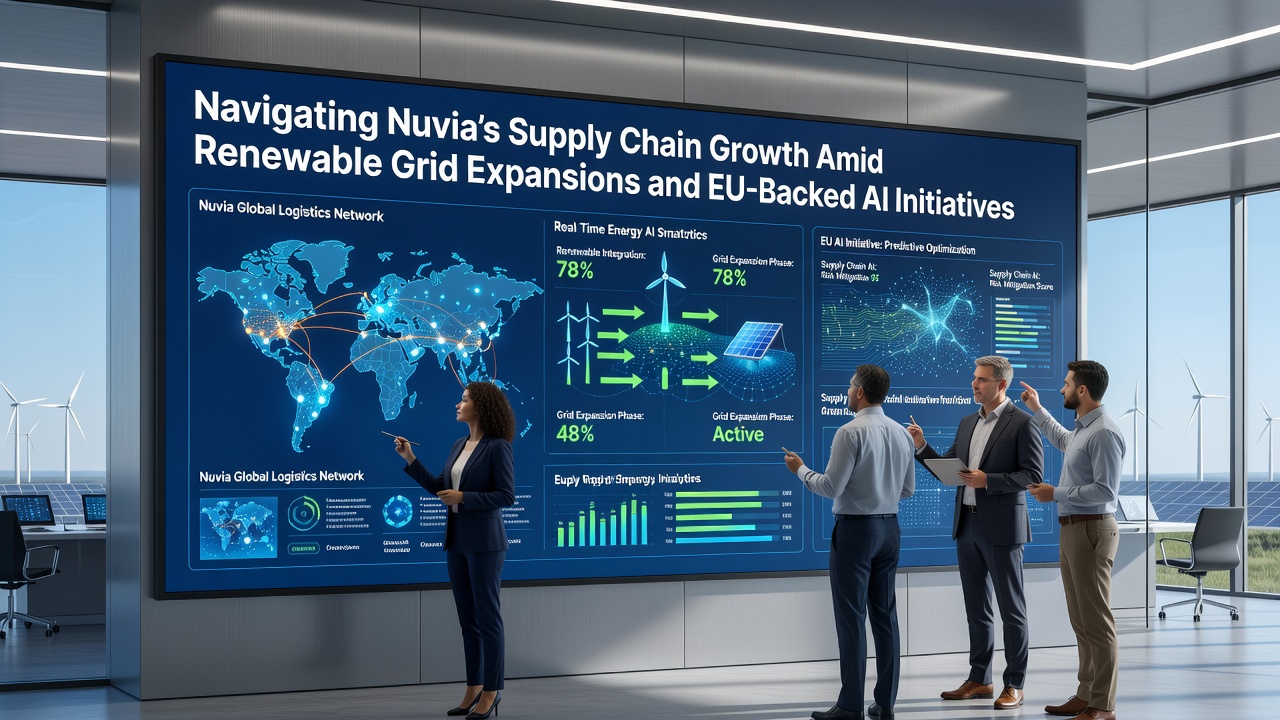
Supply chain teams at Nuvia have coordinated component sourcing and distribution schedules with the rollout of new renewable energy nodes across several European regions, while parallel investments in artificial intelligence tools backed by EU programs have introduced predictive modeling into inventory management, and observers note that these dual pressures have prompted adjustments in supplier contracts and transportation routes since the middle of the decade.
Grid Expansions Alter Material Flows
Renewable grid projects have added capacity in wind and solar corridors that intersect with Nuvia's primary manufacturing zones, which means logistics planners now factor variable power availability into delivery timetables, and data from grid operators shows increased reliance on battery storage buffers that affect the timing of high-energy processes such as semiconductor assembly and cooling system tests.
Those who track industrial energy use report that Nuvia facilities in areas with recent grid upgrades have shifted portions of their peak-load operations to periods of high renewable output, reducing exposure to price spikes, while suppliers upstream have been asked to provide documentation on their own energy profiles to maintain compliance with emerging procurement standards.
EU AI Funding Supports Planning Tools
European Union initiatives that allocate resources to artificial intelligence research have channeled support toward logistics optimization platforms, and Nuvia has incorporated several of these models into its demand-forecasting systems, which allows the company to simulate supply disruptions weeks ahead adn reroute shipments accordingly.
Figures released by participating research consortia indicate that participating firms have recorded measurable reductions in excess inventory holding times, and Nuvia's integration timeline aligns with the September 2026 milestone for expanded AI pilot deployments across member states, when additional datasets from national energy agencies become available for cross-border modeling.
Supplier Adjustments and Regional Sourcing
Contract terms with key component providers have been revised to include clauses that tie delivery windows to renewable availability forecasts, and this approach has led some vendors to locate secondary production sites closer to Nuvia's assembly plants, shortening transit distances and lowering exposure to grid congestion elsewhere on the network.
One case documented by industry analysts involved a chip fabricator that relocated testing operations to a region with newly commissioned offshore wind connections, which in turn allowed Nuvia to stabilize its own production cadence during seasonal demand surges.

Challenges in Scaling AI-Driven Logistics
Implementation of the new planning software has required staff training programs that draw on curricula developed under EU-backed educational partnerships, and early adopters among Nuvia's regional teams have reported smoother coordination between procurement and transportation departments once the models incorporated real-time grid status feeds.
Yet integration has not been uniform across all sites, because legacy enterprise systems in certain locations still operate on older data architectures that limit the granularity of AI outputs, and managers have therefore staged phased rollouts that prioritize high-volume corridors first.
Broader Industry Context
Similar patterns appear at other technology manufacturers operating inside the same regulatory environment, where renewable mandates and digital innovation grants intersect, and reports from organizations such as the International Renewable Energy Agency document parallel shifts in supply chain configurations across multiple sectors.
European Commission summaries on AI deployment in industry further illustrate how funded projects have accelerated the adoption of optimization algorithms that account for energy variables, providing a common reference point for companies like Nuvia that must align internal processes with both infrastructure changes and research outputs.
Conclusion
Continued alignment between Nuvia's supply chain protocols and the expanding renewable grid alongside EU-supported AI capabilities will depend on sustained data sharing between energy providers, technology developers, and regulatory bodies, and the September 2026 horizon for additional pilot results offers a checkpoint for evaluating whether current adjustments have produced measurable stability in component availability and cost structures.